
"When are we ever going to use this?"
Every math educator has heard it. In his fourth year of teaching, José Vilson heard it from a middle schooler named Olandria, mid-lesson on combining like terms. He gave the standard answer. It didn't satisfy her, and it didn't satisfy him.
By the end of that year, he'd landed on a different reading of the question. It wasn't laziness or a lack of grit. It was frustration from a student who wanted to do well and had no footing in the work in front of her. That insight is the seed of his new book, and it compresses into one line he repeats throughout: "we don't teach math; we teach students math."
It sounds like a classroom idea. It's actually a systems idea, and that's why it belongs on the desks of the people who build curricula, buy platforms, design PD and set policy.
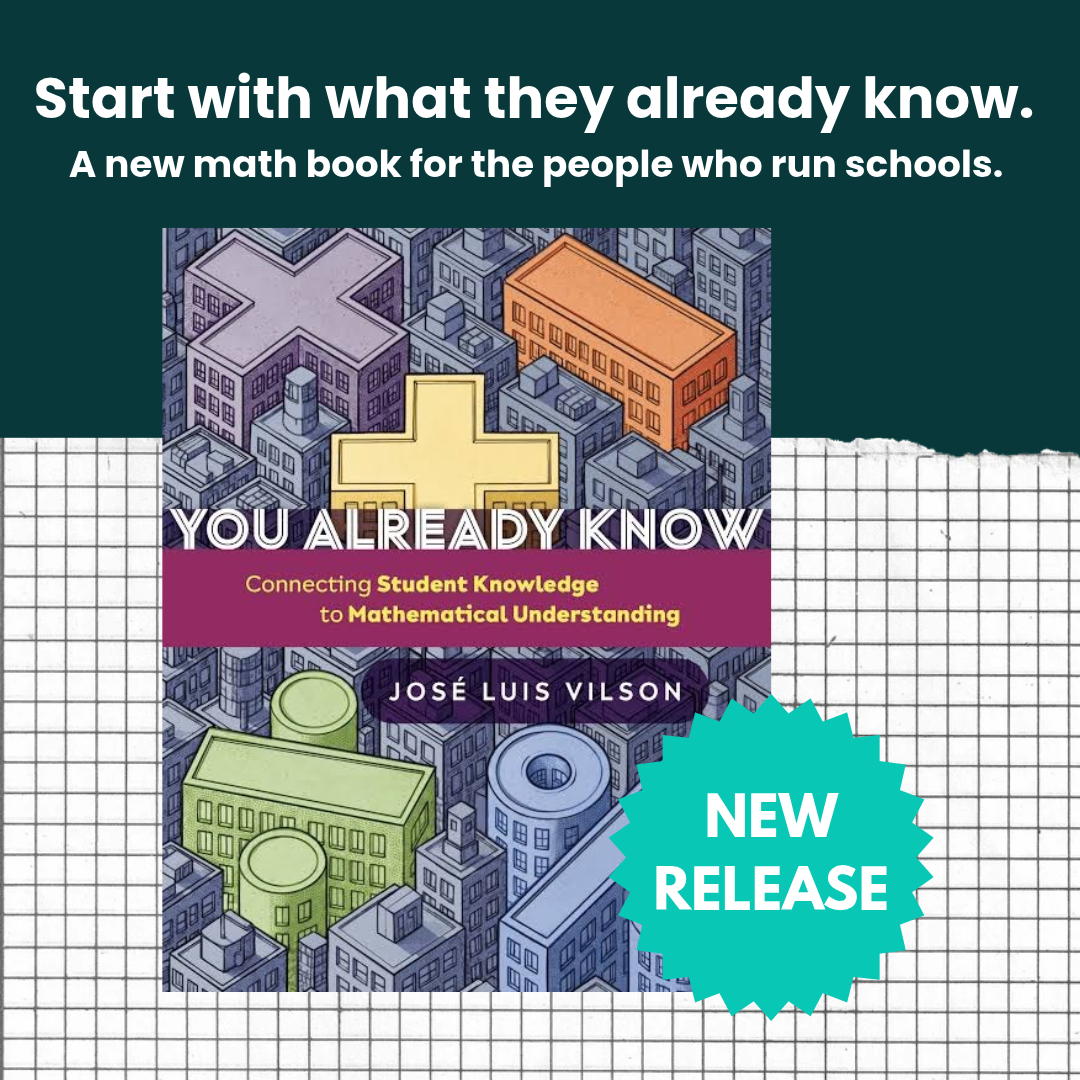
The book and the author
You Already Know: Connecting Student Knowledge to Mathematical Understanding came out from Heinemann on October 22, 2026. It's a 184-page paperback aimed at grades 4–10, the stretch where students either build a ramp to algebra or decide they're "not math people."
José draws on more than 15 years teaching middle school math in Inwood and Washington Heights in Manhattan. He's a National Board Certified Teacher and a former Math for America Master Teacher. He holds a computer science degree from Syracuse, a master's in math education from City College, and a PhD in sociology and education from Teachers College, Columbia. He co-founded and leads EduColor, and is a New America Education Research Fellow. His first book, This Is Not a Test, made the case for teacher voice in education reform.
The endorsements signal the book's reach beyond the classroom. Ruha Benjamin places it in the lineage of Bob Moses and the Algebra Project. Robert Q. Berry III, dean of Indiana University's School of Education and a past NCTM president, credits José with tying classroom moments to the policies and histories that shape them.
Five principles, read from the leadership side
The book is built on five principles of responsive math pedagogy. Each one is written for teachers. Each one also implies something about the systems around them.
Use what students already know. Instruction starts from assets, not gaps. For leaders: does your diagnostic data surface what students can do, or only what they can't?
Allow more mistakes. Errors are information. For leaders: do your accountability metrics and walkthrough tools punish the visible struggle that real learning produces?
Support students' struggle. Productive struggle needs time and scaffolds, not rescue. For leaders: does the pacing calendar leave room for it?
Let students teach, too. Discourse and student-led thinking build understanding. For leaders and product teams: do your tools and routines position students as explainers, or only as answerers?
Answer questions with more questions. Curiosity is the engine. For leaders: does your PD model the same inquiry you're asking teachers to bring to students?
José applies these across percents, fractions, ratios, slope, functions and algebraic thinking. He also rejects the procedural-versus-conceptual false choice that has fueled years of "math wars" debate. His argument is that rigor and responsiveness work together, not against each other.
Why this matters beyond the classroom
For district and school leaders. In a Heinemann excerpt, José names the policy debates directly: back-to-basics operations, specialized math teachers in tested grades. He warns these fights can freeze schools in analysis paralysis. His alternative is a framework that fits inside existing curricula rather than another program to adopt.
For edtech teams. Much of the market is built on gap-finding: diagnose the deficit, assign the remediation. José’s starting point is the opposite. The design question becomes how a product would surface and build on what a learner already brings.
For associations and professional learning providers. The five principles double as a coherent PD arc. They're concrete enough to model in a session and broad enough to apply across grade bands.
For STEM and workforce leaders. José argues that judging math by how close it sits to a paycheck misses the point. What transfers is the process: making sense of problems, persevering, attending to precision. Those are the habits that pipeline programs say they want, and they depend on students seeing themselves as capable early. Retention in STEM starts with identity in middle school.
From the classroom to City Hall
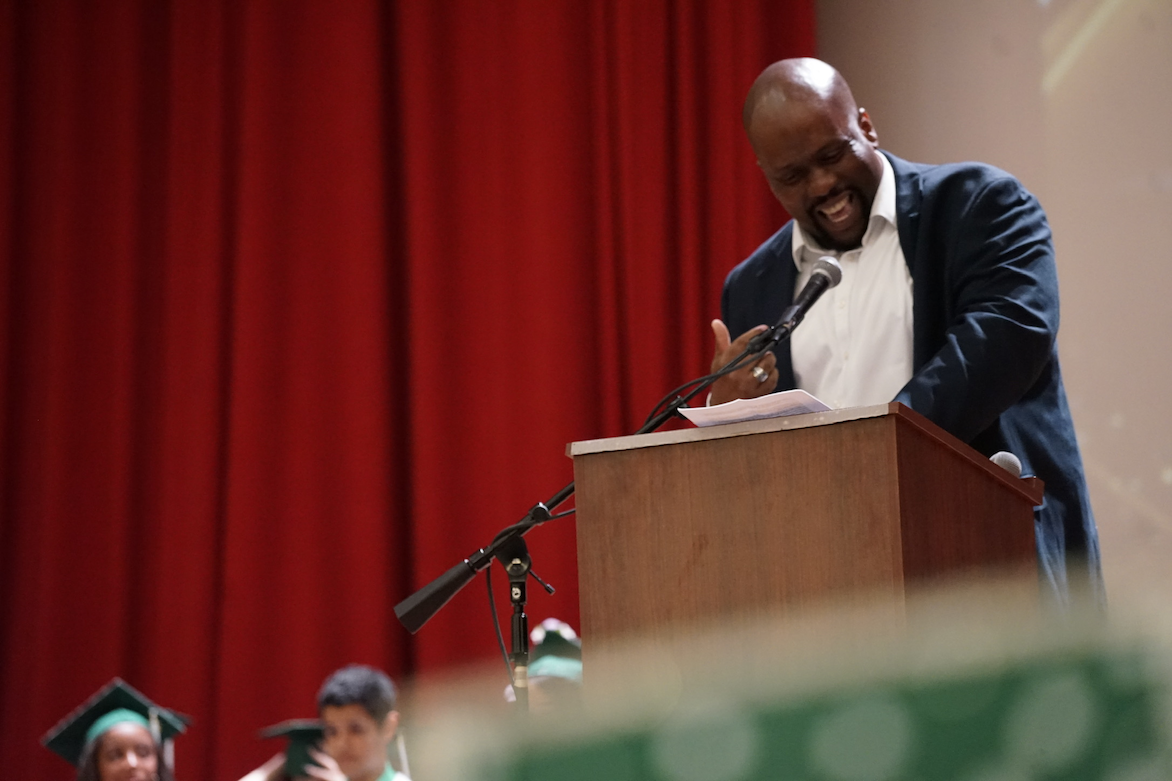
The book lands as José’s public profile has grown well beyond math education. On his blog and social channels, he writes about NYC high school admissions, what people mean by a "good school," and federal pressure on public education funding.
He has also been a visible voice in New York's new political moment. In the closing weeks of the 2025 mayoral race, he canvassed for Zohran Mamdani, and wrote about it. There he credited fellow education activists for showing how to back a candidate and still push them on schools. He attended Mamdani's January inauguration, and in February filmed a video with the mayor in a classroom about the city's universal childcare expansion.
The through-line is the same one in the book. José starts from what communities already know and asks better questions of the people in charge. Whether it's a seventh grader asking why algebra matters or a city asking what its schools owe its kids, the method holds: listen first, then build.
Start with what they already know
The pressure on math education isn't easing: recovery, acceleration, AI, workforce readiness, and the perennial fights over method. You Already Know doesn't add another mandate. It offers a stance that leaders, builders and policymakers can carry into every decision: begin with the knowledge students bring, and design the system to grow it.
Order You Already Know from Heinemann (paperback, eBook, or bundle). Code PBYOUKNOW takes 20% off with free shipping. For a preview, read the excerpt "When Do We Actually Use Math?"