What happens when tomorrow’s technology inherits yesterday’s inequalities?
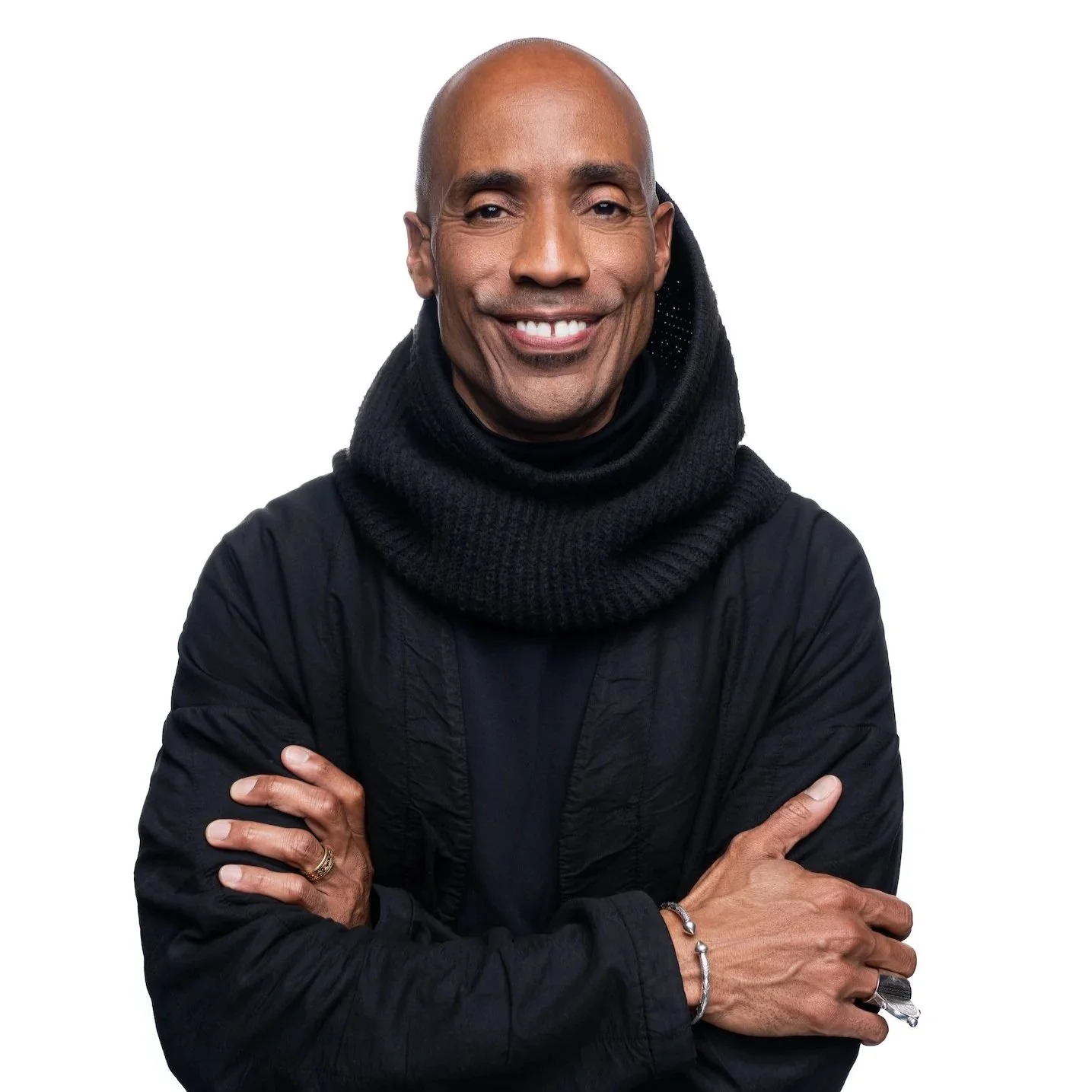
Kamau Bobb
TECHNOLOGY POLICY SCHOLAR
NATIONAL STEM EDUCATION LEADER
AUTHOR
Meet Kamau
Former Director of STEM Education Strategy & Research at Google
Founding Senior Director of Georgia Tech’s Constellations Center for Education in Computing
Pairs deep STEM expertise with a critical understanding of the systems shaping access and opportunity
Kamau Bobb is the founding Senior Director of the Constellations Center for Education in Computing at Georgia Tech. He is the former Director of STEM Education Strategy and Research at Google. He is an engineer and science and technology policy scholar whose work focuses on the STEM enterprise, large educational systems, and the structural conditions that influence contemporary American life.
He brings to his current position a wealth of experience as a former Program Officer at the National Science Foundation (NSF). At NSF he was responsible for $30 million annually of investments targeted on improving computing and STEM education. In that role Dr. Bobb worked to help shape the national research agenda for effective means of delivering equitable and quality computational education to all students. He has worked with members of the Office and Science and Technology Policy in the Obama Administration to set the national strategy for STEM education at both post-secondary and secondary school levels. He was selected as a member of President Obama’s My Brother’s Keeper STEM + Entrepreneurship Taskforce to help U.S. cities craft strategies to engage young men and boys of color in the STEM landscape. Prior to his federal appointment, Dr. Bobb was the Director of the STEM Initiative for the University System of Georgia, a collaborative effort with the governor’s office to improve STEM education across the 30 public institutions serving approximately 325,000 students in the state.
Dr. Bobb holds a Ph.D. in Science and Technology Policy from Georgia Tech and M.S. and B.S. degrees in Mechanical Engineering from the University of California, Berkeley. He is a member of Leadership Atlanta Class of 2022 and sits on the Board of Trustees of Spelman College.
SPEAKING TOPICS
-
For generations, the crack of the bullwhip enforced a racial caste system that denied Black people freedom, power, and access to knowledge. Though the whip no longer sounds, the structures it created endure in the institutions that determine who learns, who governs and who has access to opportunity—none more consequential than education. Today, a new instrument is reshaping the American calculus of race and power in education: the algorithm. Celebrated as efficient and transformative, artificial intelligence is becoming the architecture of modern education. But what happens when the technologies imagined to build the future are erected on the foundation of an unequal past?
Kamau examines how systems designed to separate and exclude have evolved from the plantation to the classroom, from the bullwhip to the chatbot. He explores how longstanding patterns of racial exclusion are being reproduced by the very technologies heralded as engines of opportunity. In the face of the technical swirl, he offers that discernment and firm grounding in the principles of justice are more critical than ever.
-
In an age where knowledge itself is digitized and educational policy is stripping curricula of the complete historical narrative, what happens to memory? How can we trust AI enabled systems’ presentation of history when neutrality has been weaponized and old biases and discrimination are masquerading as fair and balanced discourse.
In this talk, Kamau discusses the significance of memory, as made real through familial tradition and importantly through full, honest and complete education. Grappling with the banning of books in schools and state and local educational practices of constraining and burnishing what students learn about the American story feed AI generated versions of the national narrative that obscure our collective memory. The challenge he explores is that while memory may be malleable, the history we remember has to be based on the truth if we are to enter this digital age with a chance for justice to be on firm footing.
-
Over the course of the first quarter of this century, the rise and influence of STEM education have been overwhelming – and in many ways, at the expense of complete liberal arts education. The ascension of Big Tech and the national priority of driving a technology-based economy have led to an educational system oriented towards workforce development. The prevalence of bootcamps and certification training outfits all in service of à la carte skill development has elevated training and workforce development as the goals of education, rather than education – the development of critical citizens – being the goal itself. In this talk, Kamau grapples with the competing objectives of education and training in an era where workforce development and career readiness are encroaching on the more comprehensive objectives of liberal education. This tension is coincident with a surge of racial animus and violence enacted through policy and physical weapons. While workforce readiness remains essential for a functioning society, educated critical citizens that can work, are necessary for a self-correcting democratic society.