Transform difference into direction and rebuild what’s possible.
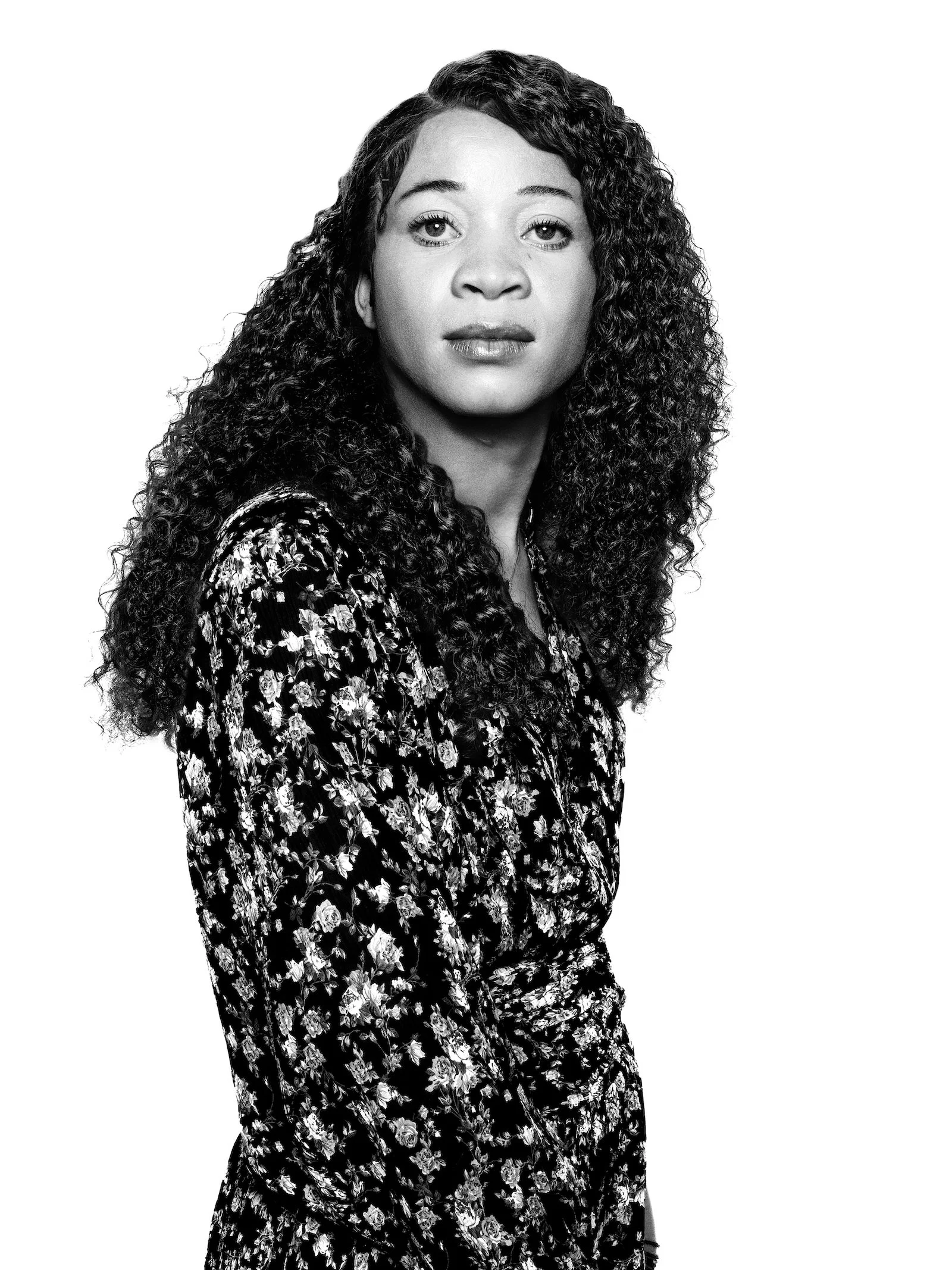
Chantale Zuzi
REFUGEE RIGHTS ADVOCATE
HUMANITARIAN LEADER
FOUNDER & EXECUTIVE DIRECTOR, REFUGEE CAN BE
SPEAKING FEE: $7,500 - $12,500
EXCLUSIVE
Meet Chantale
One of the most compelling voices of her generation on resilience, human potential and what it truly means to rebuild a life
Nonprofit founder transforming the lives of refugee girls in Uganda
A primary source on displacement, identity, and the power of choosing to build after everything is lost
Chantale Zuzi has witnessed more in her twenties than most people witness in a lifetime. Born in South Kivu, Democratic Republic of Congo, she lost both parents in a village massacre on her thirteenth birthday and spent five years displaced across three countries. She arrived in the United States with nothing but the lessons she had forged through loss and turned them into something the world is still catching up to.
She is the founder and Executive Director of Refugee Can Be, a nonprofit providing secondary education, safe housing, and leadership development to refugee girls in Uganda—the same settlement where she once lived as a displaced teenager. She received a full scholarship to Wellesley College, where she graduated with a degree in Political Science. She has been mentored by Hillary Clinton and Angelina Jolie, spoken at the United Nations, the World Economic Forum, and the Clinton Global Initiative, and was photographed by Platon for the Cultural Leaders as a Catalyst of Change campaign at Davos 2023. Her TEDWomen 2023 talk has reached audiences worldwide. In October 2025, journalist Nicholas Kristof featured her on the front page of The New York Times.
What makes Chantale singular is not only what she survived. It is what she chose to do with it. Through devastating loss and deliberate choice, she developed a practice of intentional, active resilience that she brings to every room she enters. She speaks about building forward with clarity, with purpose, and with the authority of someone who has actually done it, in conditions that would have stopped most people entirely.
Chantale's vision is a world where no girl is defined by what was taken from her - where talent is met with opportunity, where difference is recognized as direction, and where the next generation is trusted to lead, not just invited to wait. Every talk she gives, every room she walks into, every girl whose life she changes is a step toward that world. She is not finished building it. And she invites every audience she speaks to, to build it with her.
SPEAKING TOPICS
-
Most people will experience loss - of a person, a dream, a future they had planned. Few have a framework for what comes next. In this talk, Chantale Zuzi draws on her experience of losing everything at thirteen—her parents, her home, her country, her sense of safety—and offers something rare: a deeply practical and hard-won roadmap for moving through loss without being defined by it. She shows audiences how to grieve fully and build anyway. How to accept what cannot be changed without surrendering what can be created. And how the futures we build after loss are often larger, more meaningful, and more powerful than the ones we had originally imagined. This talk is for anyone navigating uncertainty, grief, or the end of something they thought would last and searching for what comes next.
Ideal for: Corporate leadership, healthcare, higher education, philanthropy, government
-
Chantale Zuzi was born with albinism in a community that considered it a curse. She is legally blind. She could not read the blackboard or take notes like other students. So she built her own system, learning through listening, memorizing, creating. What the world called a limitation, she turned into a method. In this talk, Chantale explores what her experience of living with a condition that two cultures defined completely differently as spiritual threat in the DRC and as medical limitation in the United States reveals about how we understand disability, difference, and human potential. She challenges audiences to examine how they define ability, whose ways of knowing they reward, and what extraordinary capacity they may be overlooking in the people around them. Ultimately, this is a talk about the radical act of deciding for yourself that your difference is not a deficit. It is your direction.
Ideal for: DEIB initiatives, higher education, healthcare, corporate culture, youth audiences
-
The next generation is not waiting for permission to lead. They are already leading. But the systems, institutions, and philanthropic frameworks designed to support them were built without them, for a world that no longer exists. In this talk, Chantale Zuzi brings a perspective that is both structurally clear and irreducibly personal: she was a refugee girl who had no seat at the table, built a seat, and then went back to build a table for the girls who came after her. She challenges leaders, funders, and institutions to move from charity to partnership—from speaking for the next generation to building with them.
Drawing on her experience as a young founder navigating some of the world's most powerful rooms, Chantale offers a new framework for intergenerational leadership that begins not with permission but with trust.
Ideal for: Philanthropy, corporate leadership, government, higher education, foundations
-
In 2016, Chantale Zuzi was a teenager in a refugee camp in Nairobi with an approved resettlement case. Then the U.S. suspended all refugee admissions. She waited two more years. She was eventually admitted as an emergency case; not because policy changed, but because her albinism placed her life in documented danger severe enough to qualify as an exception.
In this talk, Chantale brings to the policy conversation something no expert in the room can: the lived experience of being on the other side of the decision. She examines what displacement actually does to a human being, what it asks of the body, the memory, the sense of self - and what it costs when systems are built around paperwork rather than people. She leaves every audience with a question they will not be able to stop thinking about: when did we last look at the person, and not just the file?
Ideal for: Government, global health, law, migration and human rights organizations, universities