Master how to learn, remember, and think in an age when answers are everywhere.
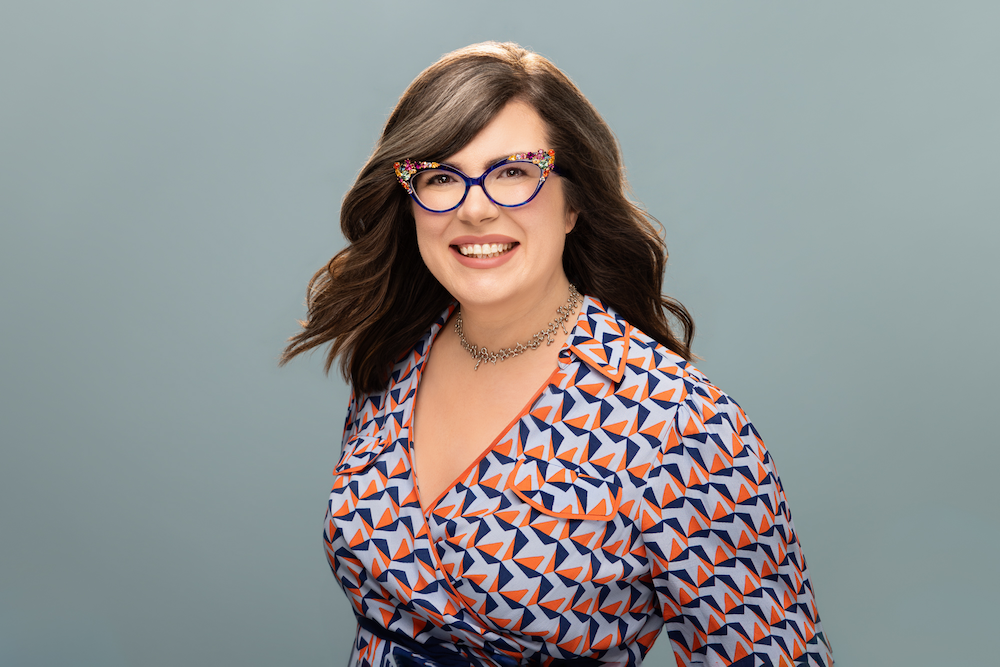
Victoria Groce
WORLD QUIZZING CHAMPION
PROVEN PRACTITIONER OF LEARNING SCIENCE
FORTHCOMING HARPERCOLLINS AUTHOR
Meet Victoria
Jeopardy! Masters Champion, defeating five of the greatest players in the show’s history
Expert on memory, pattern recognition, retention & efficient learning
Demonstrates why mastery is built through method, not innate talent
Victoria Groce is the first American to win the World Quizzing Championship and a leading voice on the science of learning. She is a proven practitioner who has read the research and done the thing.
Her work occupies the space between academic learning science and practical transformation. It is built around four signature ideas she brings to the stage: Memory Hygiene, Learning to Learn, Mastery Alongside AI, and Trivia as a Lab. The through-line: mastery is a method, not a gift and none of it is guaranteed.
A fifteen-time medalist at the International Quizzing Championships, Groce captained the United States' national quiz team to consecutive gold medals in 2023 and 2024, set the all-time record score at the World Quizzing Championship in 2026, and has starred as The Queen on ABC's The Chase since 2022. In 2024, she returned to Jeopardy! and won both the inaugural Jeopardy! Invitational Tournament and Season 2 of Jeopardy! Masters.
Her first book, Know It All: The Quiz Champion's Essential Guidebook to Learning Anything (HarperOne, February 2, 2027), turns a decade of competitive practice into a handbook for anyone who wants to learn better. As she writes in the book, she is not especially gifted; she just knows how to learn, and she shows readers how to do the same.
"Studying science while raising a kid was doable," Groce has said of the pivot that started it all, "if I was organized and intelligent with how I used my time to learn." That conviction: that anyone can learn better, not just score better is what she now brings to students, parents, educators, and adults navigating reinvention.
SPEAKING TOPICS
-
What if the reason most people never feel like they've "learned" something is that no one ever taught them how? In this talk, world quizzing champion Victoria Groce shares the framework she developed as a working mother of a kindergartener returning to science coursework, which is the same framework that later carried her to the top of international quiz. Her core observation, drawn from years of education research and personal practice, is that most students and many adults learn how to learn by observing friends, older siblings, and established habits. The result is a lifetime of studying that feels harder than it should and delivers less than it promises.
Victoria walks audiences through what she calls the learning case, the learning story, and the learning path: a three-part framework for turning intention into retention. The learning case names what you're trying to learn and why, asking "why" until you reach something primal: belonging, security, mastery, or community. The learning story is how you narrate your own capability. It is the difference between "I'm bad at math" and "I haven't yet built the study routine math requires." The learning path is the sustainable routine itself, built on the research-backed disciplines of retrieval practice, spaced repetition, the generation effect (material you make yourself is more memorable), and troubleshooting for what to do when you've learned something wrong, oversimplified, or outdated.
Audiences leave with a diagnostic vocabulary for their own learning, a study protocol that works with their real life instead of demanding they carve out heroic blocks of time, and a specific set of moves for the hardest moments of any learner's journey: the transitions into AP coursework, into college, into professional school, or after a first major academic failure. Above all, they leave with permission to stop treating learning as a fixed trait and start treating it as a practice.
Best-fit audiences: Students in transition, first-generation college students, college and university learning centers, first-year-experience programs, and adult learners returning to school or professional certification.
-
What if the most important human skill in the age of AI isn't learning to use the tools, it’s making sure there's still enough of you to direct them? In this timely talk, world quizzing champion Victoria Groce reframes the AI conversation away from prompts and productivity and toward the enduring human capability at its center: you cannot prompt what you don't know is there. Drawing on decades of research on cognitive offloading from writing to calculators to LLMs and on her own practice as a competitor who has spent a decade rebuilding what it means to master a domain from the inside out, Victoria makes the case that AI raises the value of deep, retrievable human knowledge rather than eliminating it.
The talk unpacks what happens when we outsource everything easy and what remains uniquely, irreplaceably ours. Victoria draws on the historically optimistic view that humans figure out where tools help and where they hurt: calculators didn't destroy mathematicians, writing didn't destroy oral tradition, and GPS didn't destroy navigators, but each shifted what humans had to know for themselves in order to use the tool well. AI is the largest such shift in a generation, and the people who will thrive are the ones who cultivate a broad, well-structured internal knowledge base and know how to direct machines with it. Victoria shares the specific memory, attention, and learning disciplines that build that internal base, and the mindset that separates using AI as an amplifier from using AI as a replacement.
Audiences leave with a framework for evaluating what to keep in their own heads and what to safely offload, a set of daily practices that protect the depth of human expertise their teams actually pay for, and a fresh answer to the question every leader is fielding: "How do we stay valuable when the machines get better?" Above all, they leave with a fundamentally more grounded, less panicked relationship to AI. . . one built on human capability rather than tool hype.
Best-fit audiences: Corporate learning-and-development teams, executive audiences, universities preparing students for an AI-transformed workforce, and any keynote or conference where the AI conversation needs a human-centered counterpoint.
-
What if the story we tell ourselves about "smart people” that they were born that way, that some minds are just wired for it, that the rest of us should be realistic about our limits is the single most limiting story in our culture? In this myth-busting talk, world quizzing champion Victoria Groce uses her own path from a pre-med student defeated by organic chemistry to the top of international quiz as a proof of concept for a much larger claim: none of this is guaranteed, no one is "just naturally smart," and mastery is a method, not a gift.
Victoria opens with the origin story she wishes more people knew: a working mother returning to science coursework, a career counselor's questionnaire, a job at a medical school that exposed her to the education-research literature, and the deliberate choice to treat trivia as a laboratory for a much bigger question about how humans actually learn. She walks audiences through what a decade of competition has taught her about the durable difference between talent-framing and method-framing . . . why the first quietly closes doors, why the second reliably opens them, and what changes in a person, a classroom, or an organization when the story gets swapped. The talk is built around interactive, "beat-the-expert" moments that let audiences feel the method work in real time, so they leave with proof in their own memory rather than just conviction in their notes.
Audiences leave with a rebuilt story about their own capability, a specific set of learning myths and facts they can carry back to their teams or families, and a shared memory experience that anchors the whole conversation. Above all, they leave with an understanding that none of the ceilings they've accepted for themselves are as fixed as they were told.
Best-fit audiences: All audiences. Especially effective as a keynote opener, for prep-school parents and student assemblies, and for corporate audiences where the fixed-vs-growth-mindset conversation needs a fresh, evidence-based voice.