
The Records Don't Lie. But They Can Be Made to Say Almost Anything.
Dr. Terence Keel's The Coroner's Silence arrives at a moment when the gap between institutional claims and public trust has rarely felt wider.
There's a question underneath all the recent headlines about ICE shootings and immigration enforcement that most people haven't thought to ask. Not just: what happened? But: how would we ever really know?
When Lorenzo Salgado Araujo was shot and killed by an ICE officer in Houston this month, federal officials said he had tried to ram an agent. His family said he was a man who had studied carefully what to do if ICE pulled him over, and that he had been actively pursuing legal status. Bystander video told a partial story. But the full footage, the full accounting, hasn't been released.
Civil rights advocates pointed to a pattern: in several other recent shootings involving federal officers, initial agency descriptions were later contradicted by video evidence. The son of Lorenzo Salgado is asking for an independent investigation. So are members of Congress, and the president of Mexico.
The request for independence is the key word. Because the question of who investigates, and what they're required to document, and who gets to see that documentation, isn't just a political question. It's a structural one. And it's exactly the question that Dr. Terence Keel has been researching for the better part of a decade.
What the records reveal about the records
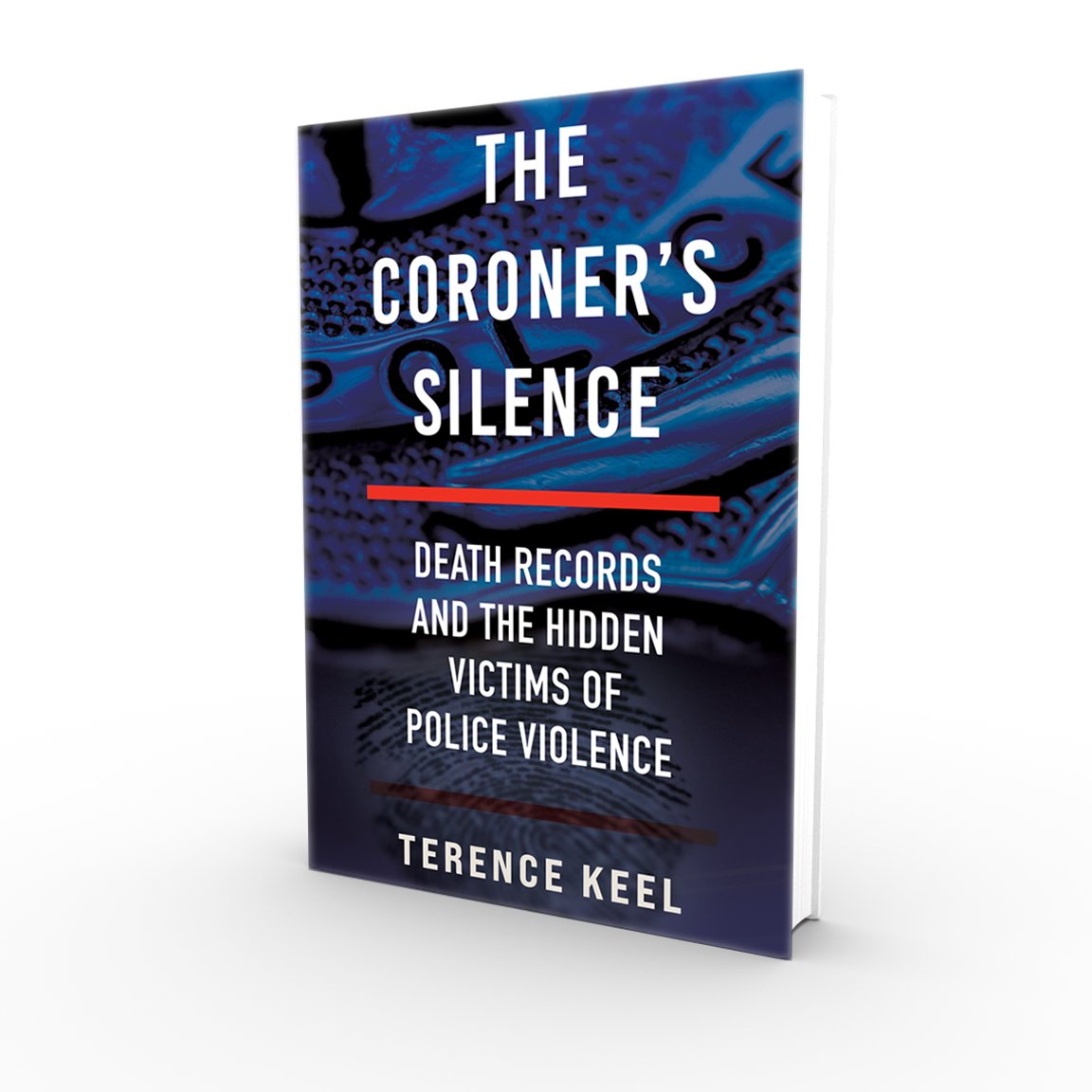
Terence Keel is a professor at UCLA, founder of the Lab for BioCritical Studies, and the author of The Coroner's Silence: Death Records and the Hidden Victims of Police Violence, published by Penguin Random House. The book is the product of years of forensic document analysis, public health data, and interviews with grieving families who kept running into the same walls.
What he found is this: the systems we built to document what happens when someone dies in state custody, coroner reports, death certificates, autopsy findings, have in many cases been quietly repurposed. Not through dramatic cover-ups, but through bureaucratic choices. Withheld names. Causes of death recorded as medical events rather than circumstances of force. Incomplete investigations that technically satisfy procedural requirements while telling us almost nothing about what actually happened.
The result is that the full scale of in-custody death in America is functionally invisible. His research documents that in just the last 20 years, police have killed at least 32,000 people during arrest, more than twice the total number of executions carried out in American history. Far more of those deaths than we know involved people who were unarmed, in medical distress, or held pre-trial. Many would still be alive if they had been directed toward care rather than custody.
And most of them have not been in the news. Their names don't trend. Their families never got an independent investigation. The records said something, and that was that.
Why this matters beyond the headlines
It would be easy to read this as a story about a specific political moment. And it is, partly. The current immigration crackdown has put federal enforcement actions in the spotlight in ways that make Terence's research feel freshly urgent. But his argument is older than this administration and will outlast it.
The deeper point is that bureaucratic systems carry values. The choices made about what to document, who has access, and how causes of death get classified aren't neutral technical decisions. They reflect whose lives the system was designed to make legible, and whose it was designed to make disappear.
That argument has implications well beyond criminal justice. Every organization, every institution, every professional field has its own version of documentation systems that can obscure or reveal. Healthcare has mortality data and reporting requirements that vary wildly in how honestly they surface disparities. Schools have discipline records. Corporations have HR files. The question Terence is really asking is: do your systems produce the truth, or do they produce a defensible version of it?
Terence's research has already contributed to real policy changes, including revised cardiac care standards in jails developed with the American Heart Association, and AI tools designed to surface patterns of neglect and abuse that would otherwise remain buried in individual records.
What this means for your organization
For K-12 educators, this is a civics lesson that's actually happening. Students watching the news right now are trying to figure out whether institutions can be trusted, and what recourse looks like when the answer is no. Terence gives teachers and administrators a rigorous, accessible framework for that conversation.
For colleges and universities, the book offers entry points across disciplines: public health, criminal justice, history, data science, journalism, and law. His interdisciplinary research is exactly the kind of work that prompts students to think across silos.
For nonprofits and advocacy organizations, Terence's work connects to every mission that involves accountability, transparency, and the relationship between communities and the institutions that claim to serve them. His message isn't that the system is broken beyond repair. It's that reform requires first being honest about what the system is actually doing.
For corporations and associations, the trust question runs inward. When employees and members look at how your organization investigates complaints, documents decisions, and holds itself accountable, what do they see? Minda Harts, whose Seven Trust Languages framework helps organizations measure and build trust at every level, asks a version of the same question from the inside out. The two bodies of work, one examining public institutions, one examining workplace culture, point toward the same truth: transparency isn't a PR strategy. It's the foundation that everything else is built on.
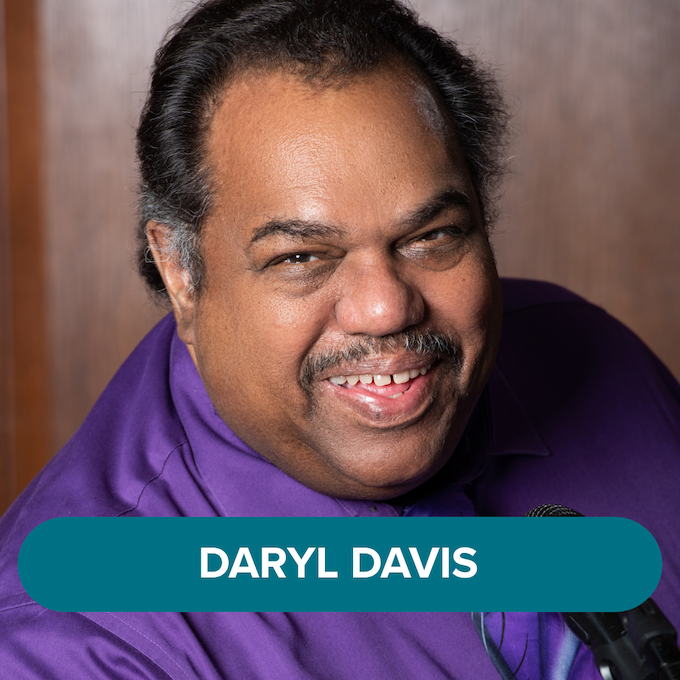
And for community-building practitioners, Daryl Davis has spent decades doing some of the most counterintuitive trust-repair work imaginable, sitting with people who hate him and building enough connection that some of them eventually question what they thought they knew. His work is a reminder that even the most fractured trust isn't necessarily permanent.

The book, and the speaker
The Coroner's Silence is the rare book that reads like a true crime investigation and functions as a policy document. It names names, cites data, follows families through years of trying to get answers, and then shows exactly what would need to change for those answers to be available.
Terence brings that same rigor to the stage. He doesn't traffic in easy outrage or detached academic analysis. He tells you what he found, what it means, and what a system that actually served the public would look like instead.
His keynote The Coroner's Silence: What In-Custody Deaths Reveal About American Justice is available now for fall 2026 and early 2027 dates. He speaks to healthcare associations, legal and policy organizations, universities, nonprofits, government agencies, tech and AI ethics audiences, and corporate teams grappling with accountability and transparency in their own work.
The question at the center of his book is one that every institution is going to have to answer sooner or later: do your systems tell the truth?
It's a better time than ever to start preparing an honest answer.