
The Future of Work is Uncertain—These Speakers Help Your Audience Navigate It
How are AI bias, creative resilience, and cross-cultural leadership shaping the future of work? In our latest blog, we spotlight five dynamic speakers redefining what it means to lead, innovate, and build truly inclusive organizations. This guide will help your events and programming stay ahead of the curve this Black History Month and beyond.
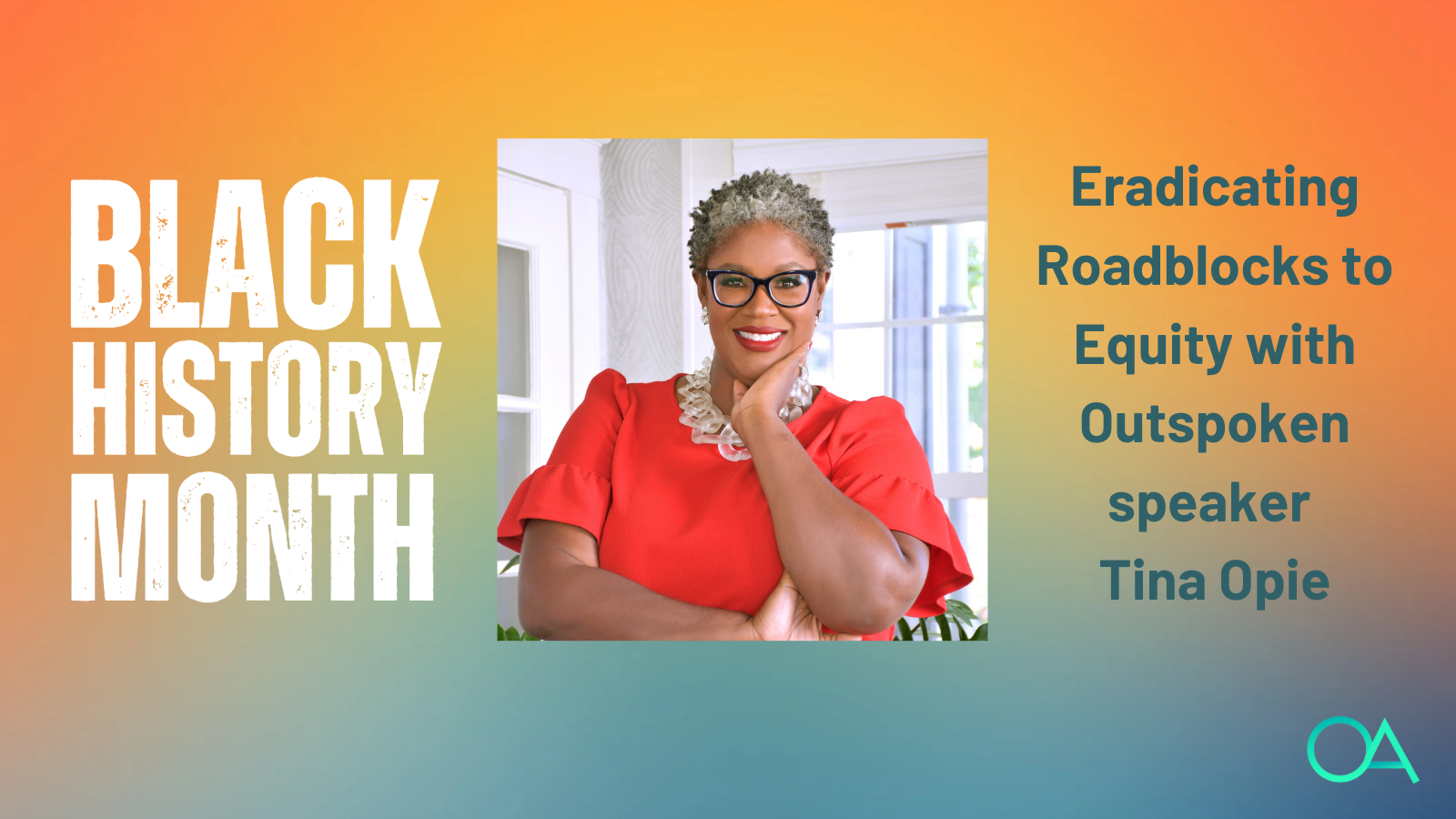
Honoring Black History Month: Roadblocks to Equity with Tina Opie
Outspoken speaker Tina Opie is an award-winning educator and researcher whose trademarked Shared Sisterhood framework has been the catalyst for individuals and organizations to unearth blind spots when it comes to biases and make lasting change, particularly when it comes to overcoming roadblocks to said justice and equity. Her book, Shared Sisterhood, digs deep into those strategies and unpacks actionable steps we can take to be more inclusive at work and at home. And it’s that book that is the groundwork for Tina’s proven strategies for overcoming obstacles to the race and gender-based discrimination that happens at more organizations than you might think.
Honoring Black History Month: Black Resistance
Here at Outspoken, we are so lucky to represent some of the leading voices within the ongoing black resistance movement. With their contributions ranging across every corner of our society, we’re highlighting some of our speakers below whose work is an undeniable force in social justice, technology, science, wealth, health, education, and more.
Black History: Centering Black Voices Every Month of the Year
At Outspoken, we are passionate about the power of inclusion. We believe a landscape of diverse ideas is foundational to building sustainable solutions that will carry us deeper into the 21st century better equipped for the challenges our collective future holds. This month, we’ve been excited to highlight Black voices, sharing some of our speakers’ expertise and essential contributions to our public discourse. But how can we honor Black History Month beyond February? How can we create an inclusive culture that lasts long after Black History Month?
Taking a 360-approach to personal and professional wellness centering underrepresented voices
February is here, and of course, that means we're thinking about Black leaders' crucial impact on every aspect of society. Whether we talk about access to food, environmental sustainability, financial health, or mind-and-body wellness, Black communities face injustice and inequality in every area—all while often serving as the voices who lead us through essential innovations that leave lasting change in communities big and small. Here at Outspoken, we are passionate about centering underrepresented voices and celebrating the power of diversity. Check out some of our speakers below who are experts in critical topics that matter and are leading discussions that examine our history, impact our present, and will lead us into the future. As we celebrate Black History, let's prioritize the issues that matter for people of color not only this month, but every month, week, and day of the year.